Responsible UX
E-Commerce Experience

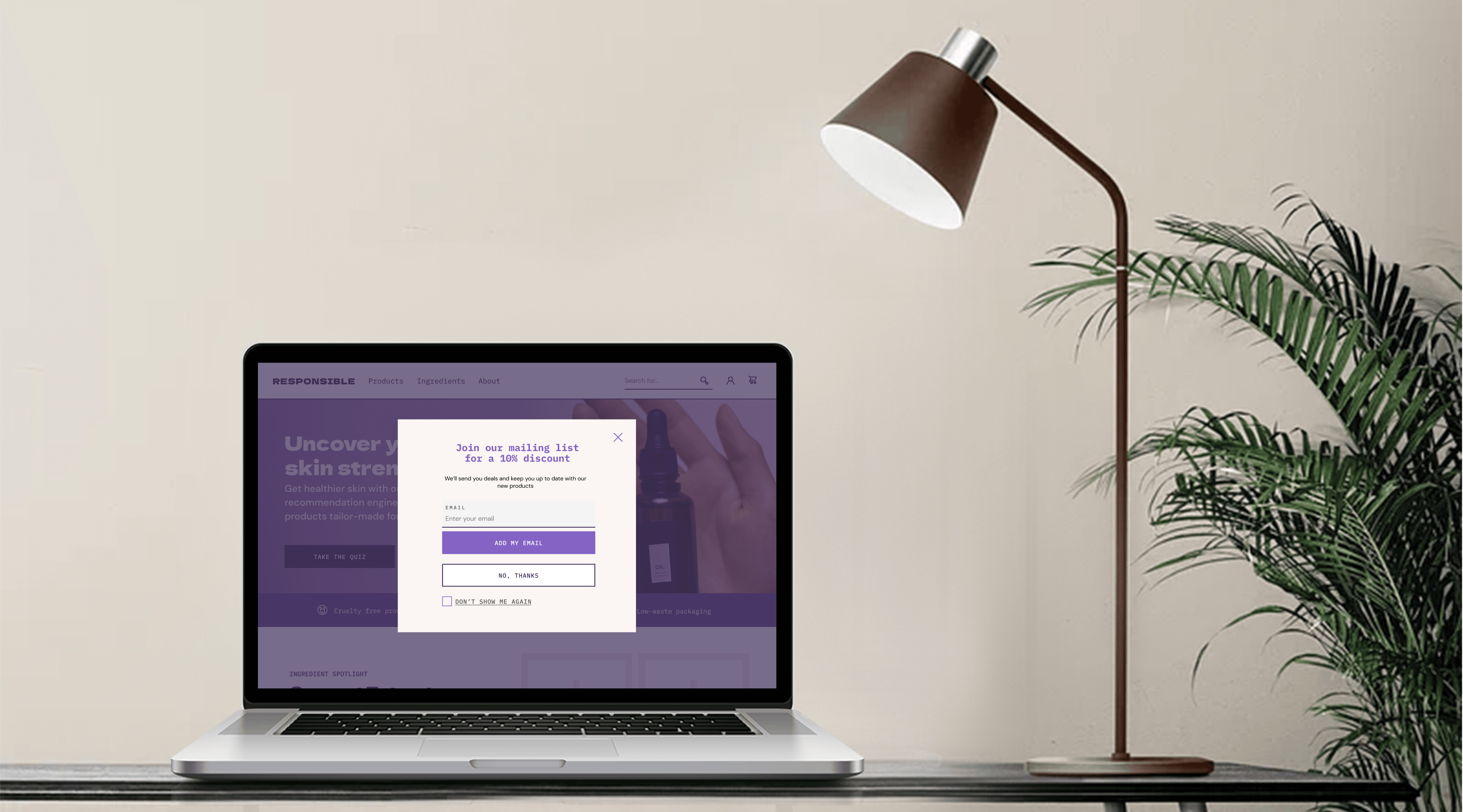
In today's digital era, we encounter a variety of online experiences, from entertainment streaming services and social media platforms to shopping for everyday products. While having access to these digital services is convenient, it is equally important that they are designed with the user's well-being in mind. This project explores how intentional and user-centered design decisions can create a more responsible e-commerce experience. By comparing responsible and irresponsible design patterns, the project demonstrates how design choices can influence user behavior and highlights opportunities to create more transparent and ethical shopping experiences.
Client:
Accenture (E-commerce Slient)
Role:
UI/UX Designer
Year:
2021
Explore the full story –
Challenge
Many e-commerce experiences rely on persuasive design techniques that encourage users to make quick purchasing decisions. While these patterns can support business goals, they can also create unnecessary pressure through manipulative messaging, fear of missing out (FOMO), or limited product information. The challenge was to explore how an e-commerce experience could encourage purchasing decisions while still prioritizing transparency, accessibility, and user well-being.
Objective
The goal of this project was to redesign common e-commerce interactions using responsible design principles. Rather than relying on manipulative design patterns, the objective was to create an experience that helps users make informed purchasing decisions through clear messaging, accessible interactions, and meaningful product information while still supporting business objectives.
Results
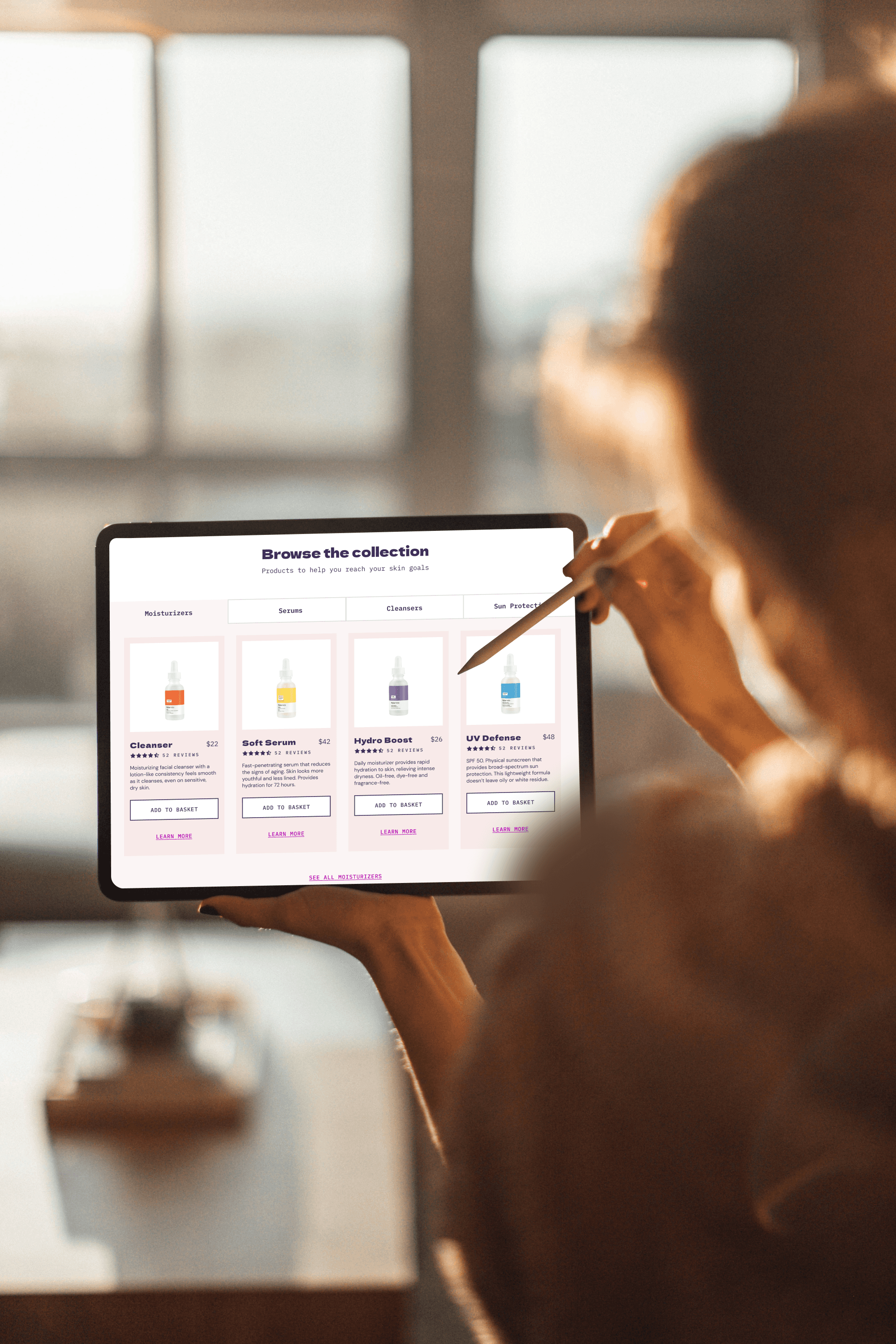
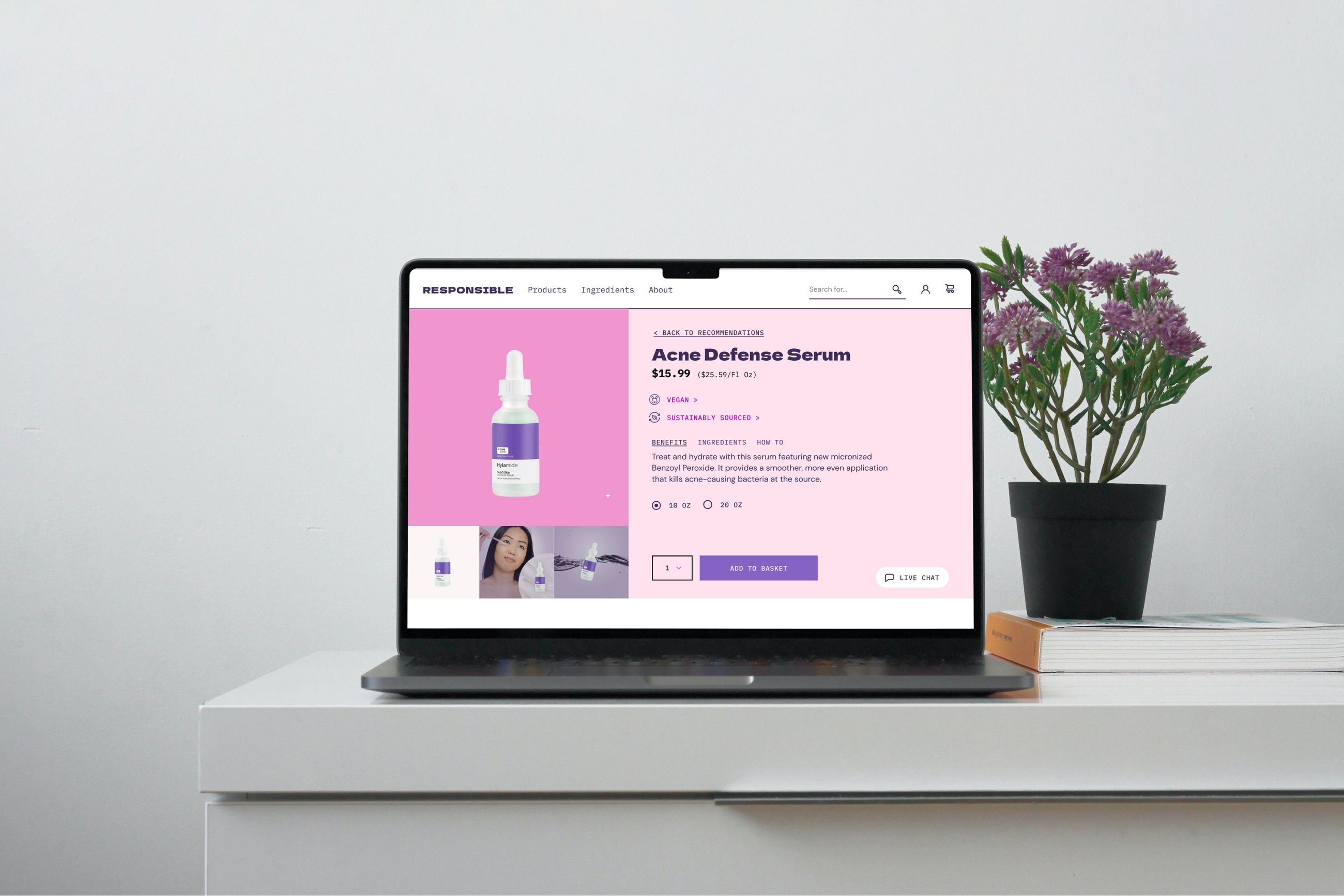
The final concept presents a responsible e-commerce experience that places user well-being at the center of the shopping journey. Instead of encouraging users to make immediate purchasing decisions, the experience begins with a personalized skin quiz that recommends products based on individual needs. Product pages provide detailed descriptions, ingredient information, and educational content that help users make more informed purchasing decisions. Accessibility was also considered throughout the experience. For example, the product carousel was designed to better support users navigating with screen readers or keyboard controls, creating a more inclusive browsing experience.